
If you have old coins sitting in a drawer or inherited silverware collecting dust, you might be sitting on real money. Here’s everything you need to know about junk silver, silver bullion, and how to sell silver for instant cash at Sterling & Knight Jewelry and Pawn.
Fast Answers: Is Junk Silver Worth Anything & Where Can I Sell Silver?
Yes – junk silver is worth significantly more than its face value. Pre-1965 U.S. dimes, quarters, half dollars, and silver dollar coins are made of 90% silver, and their melt value tracks the live spot price. With silver trading around $57.67 per troy ounce as of late July 2026, $10 face value of mixed 90% junk silver contains roughly 7.15 troy ounces of pure silver content – placing its market value near $412 before any dealer premiums or discounts, with the main pricing factors being the spot price, the silver content of the coins, and dealer premiums.
Where can you sell silver near Chicago? Sterling & Knight Jewelry and Pawn buys silver coins, silver bullion, sterling silver jewelry, and scrap precious metals for instant cash at all six store locations: Joliet, Yorkville, Berwyn, Bolingbrook, Hinsdale, and Villa Park. Walk in with a handful of old half dollars or a full bag of constitutional silver, get a quick quote, and leave with cash the same day – no waiting for an appointment, though calling ahead is encouraged for large collections.
Sterling & Knight performs basic security verification in-store (ID checks, certified testing equipment, surveillance) to protect both sellers and buyers from fraud.
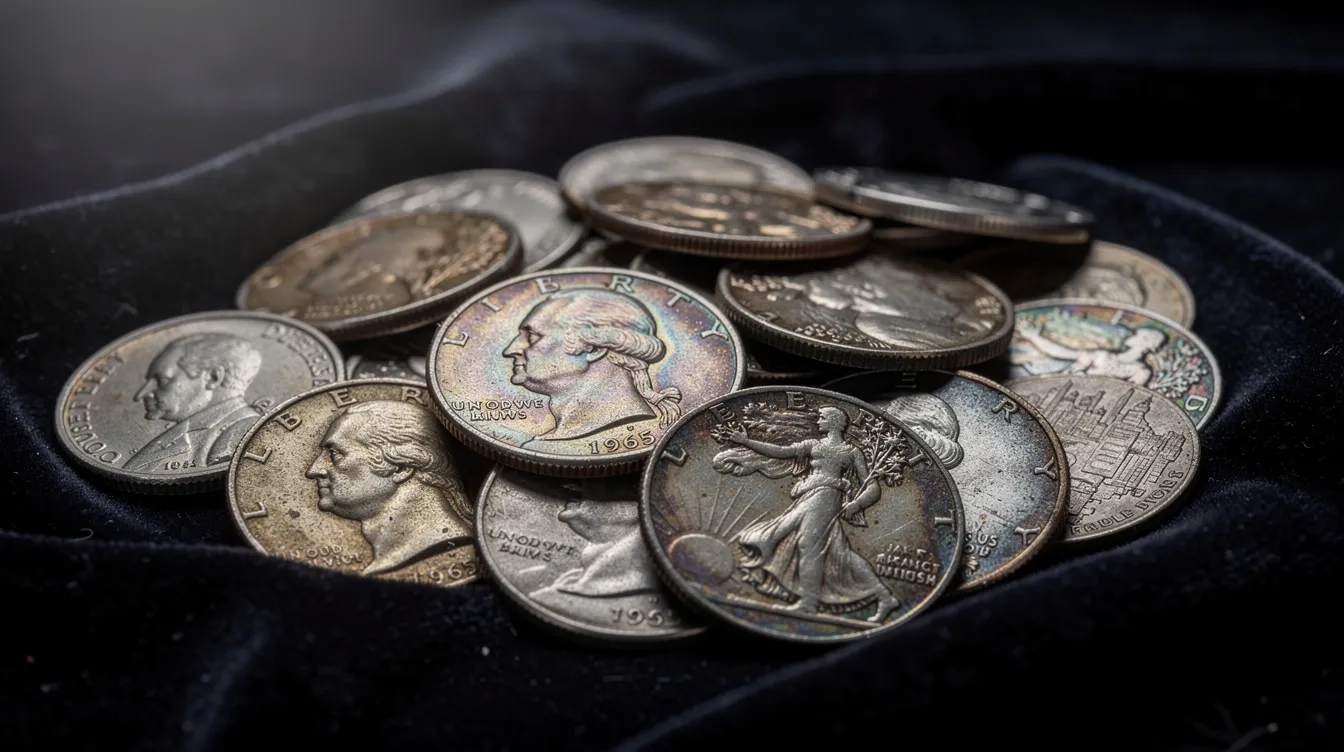
What Is Junk Silver and Constitutional Silver?
Junk silver refers to circulated U.S. coins, typically dated 1964 or earlier, valued mainly for their melt value rather than their numismatic value. These junk silver coins contain 90% silver and 10% copper – a composition the government used for everyday currency for over a century.
“Constitutional silver” is simply another name for the same coins. Pre-1965 coins contain 90% silver and 10% copper, and their metal content eventually exceeded their face value as silver prices climbed. Junk silver includes pre-1965 U.S. dimes, quarters, and half dollars, plus classic silver dollars like Morgan and Peace dollars. Specific examples include:
- Mercury and Roosevelt dimes (1916–1964)
- Washington quarters (1932–1964)
- Walking Liberty and Franklin half dollars (1916–1963)
- 1964 Kennedy half dollars
Dimes, quarters, and half dollars were minted before 1965 with this silver composition. The Coinage Act of 1965 ended silver in U.S. coins, and the U.S. Mint stopped using silver in coins in 1965 due to rising silver prices versus denomination values.
Even coins showing heavy wear, tear, and tarnish qualify as junk silver, provided they’re authentic and haven’t been filed down. These coins function like small-denomination silver bullion for investors, collectors, and anyone stacking precious metals.
Silver Content, Face Value, and Junk Silver Worth
Every 90% silver coin has a standard silver weight that dealers use to calculate junk silver worth against the live spot price. Here are the key numbers:
| Coin | Silver Content (troy oz) |
|---|---|
| Silver dollar (Morgan/Peace) | ~0.7734 |
| Half dollar (Walking Liberty, Franklin, 1964 Kennedy) | ~0.36169 |
| Quarter (Washington) | ~0.1808 |
| Dime (Mercury/Roosevelt) | ~0.0723 |
A pre-1965 silver dollar contains 0.7734 troy ounces of silver. A pre-1965 silver quarter contains 0.1808 troy ounces of silver. A silver dime contains about 2.25 grams of silver – roughly 0.0723 troy ounces.
In practice, the worth of $1 face value of 90% silver depends on several factors, but the standard example is that ten dimes, four quarters, or two half dollars hold about 0.715 troy ounces of pure silver after accounting for average circulation wear on circulated coins. If silver sits at $58/oz, then $10 face value of junk silver carries a melt value around $414.
The purchasing power gap between legal tender face value and real market value is enormous. Spending a pre-1965 quarter at a store for twenty-five cents means losing over $10 in silver content. That one dollar in face value is worth far more as metal than as currency at any point in recent history.
Types of Silver We See: Coins, Bullion, and More
Sterling & Knight buys a wide range of silver across all six locations. Here’s what customers most often bring in.
Junk silver coins include pre-1965 90% dimes, quarters, half dollars, and silver dollars. The shop also buys 40% silver Kennedy half dollars (1965–1970) and 35% silver war nickels (1942–1945), which were minted during wartime when other metals were reserved for the military.
Modern silver bullion includes American Silver Eagles, Canadian Maple Leafs, privately minted silver rounds, and bars in 1 oz, 10 oz, and 100 oz weights – all typically .999 fine silver. Bullion often commands higher premiums above spot, especially government-minted coins.
Sterling silver items are another common category. Sterling silver contains 92.5% silver and 7.5% other metals, and sterling silver jewelry is popular for its durability and beauty. Sterling silver jewelry can include necklaces, bracelets, and rings, and sterling silver is often used in high-quality jewelry designs. Brands like Silpada offer a variety of sterling silver jewelry items that carry both metal and brand value. Customers also sell flatware, hollowware, and broken chains – all valued by weight and purity.
Staff can also flag coins where numismatic value and collectibility exceed melt – rare date coins or unusual mintmarks may be worth significantly more.
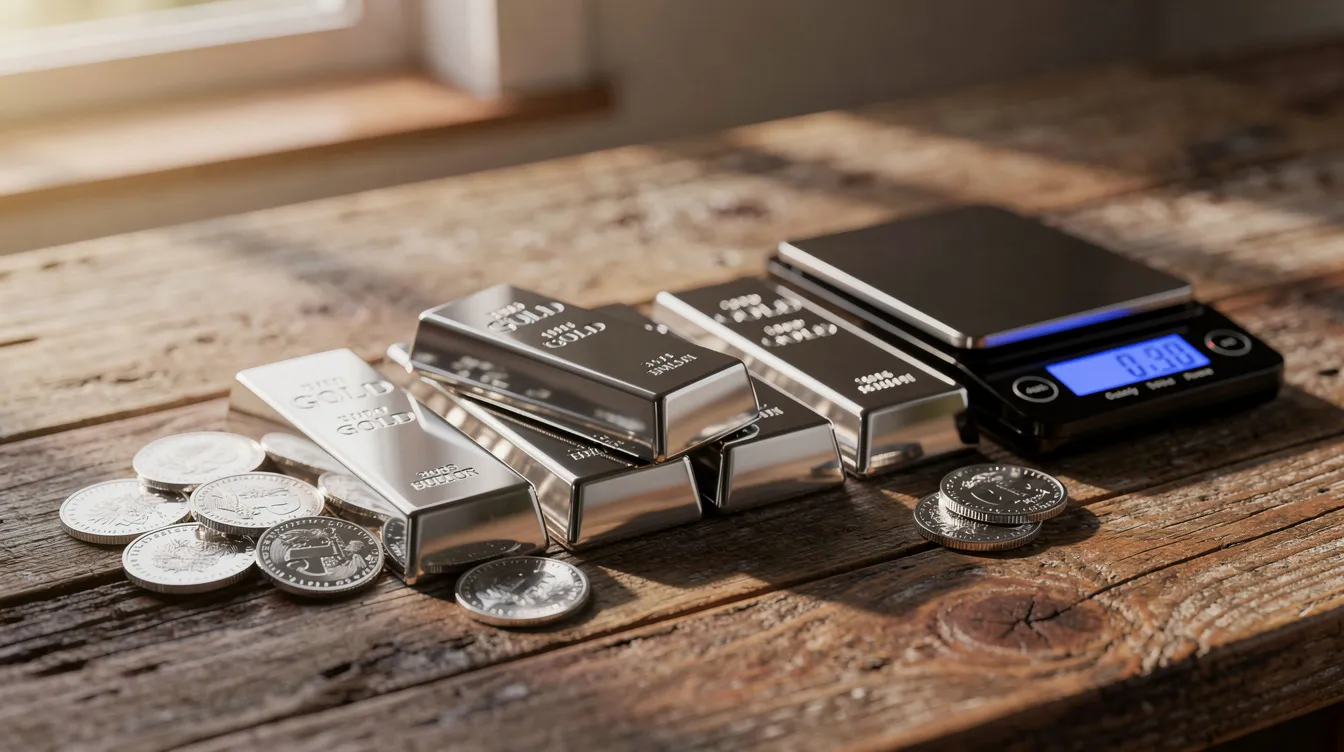
Junk Silver vs. Numismatic Value and Other Precious Metals
Numismatic value applies to coins that are rare, historically significant, or in exceptional condition. Collectors pay premiums well above melt for these pieces. A common 1943 Mercury dime, for example, is usually priced as junk silver. But a low-mintage key-date dime in top condition might sell for multiples of its silver weight to collectors who care about date, mintmark, and finish.
True junk silver, by contrast, is priced almost entirely on melt value and tracks daily spot prices. The trading spread between buy and sell is modest compared to rare coins.
Sterling & Knight evaluates both aspects. Staff test for silver content first, then check for collectible dates or varieties so sellers don’t accidentally dump a valuable coin at junk prices. This process verifies that every customer gets a fair offer based on what they actually hand over.
Silver’s price tends to be more volatile than gold due to its dual role as an investment and industrial metal. Over 50% of global silver demand is for industrial fabrication, which means economic shifts move silver more sharply than gold. Still, silver remains a popular, lower-cost entry point into precious metals for beginning investors.
Investment and Preparedness: Why People Stack Junk Silver
Junk silver has remained a go-to for decades thanks to low premiums, instant recognizability, and deep market demand. These coins served as everyday money for generations, and that familiarity makes them easy to trade, verify, and trust.
Junk silver is often used as a hedge against inflation and currency risk. Silver climbed from around $1.30/oz in the early 1960s to levels above $100/oz earlier in 2026 – an expected trajectory given persistent monetary expansion. For anyone investing in tangible assets, constitutional silver offers fractional denomination flexibility that large bars cannot. A few dimes are easier to barter than a 100-oz bar when you need small-value transactions, which appeals to preparedness-minded buyers who are ready for any scenario.
The silver market is experiencing structural deficits due to higher industrial demand compared to mining supply. Silver is used in solar technology, electronics, and electric vehicles. Consider just a few of its industrial roles:
- Silver has the highest electrical and thermal conductivity of any metal
- Silver paste is essential for electrical conduction in solar cells
- Electric vehicles require significantly more silver than conventional cars
- Silver is heavily used in electronic devices like circuit boards and switches
- Silver consumption in electronics continues to grow due to increased demand for advanced technologies
- Silver serves as a catalyst in producing key industrial chemicals
- Silver acts as a natural antimicrobial agent in medical applications
- Silver is non-toxic and safe for medical and food-related applications
- Silver is crucial for strong and corrosion-resistant metal joints in manufacturing
- Silver ions are used as a disinfectant in water purification
Silver’s unique properties make it a vital component across various industries, and this demand floor supports long-term price expectations. Sterling & Knight doesn’t give investment advice, but the team frequently works with customers who buy and sell junk silver as part of a diversification strategy.
How Sterling & Knight Tests and Buys Silver (Our Security Verification Process)
Sterling & Knight uses professional tools and procedures when performing security verification on silver items to ensure authenticity and fair pricing. Every piece that comes across the counter goes through a layered evaluation.
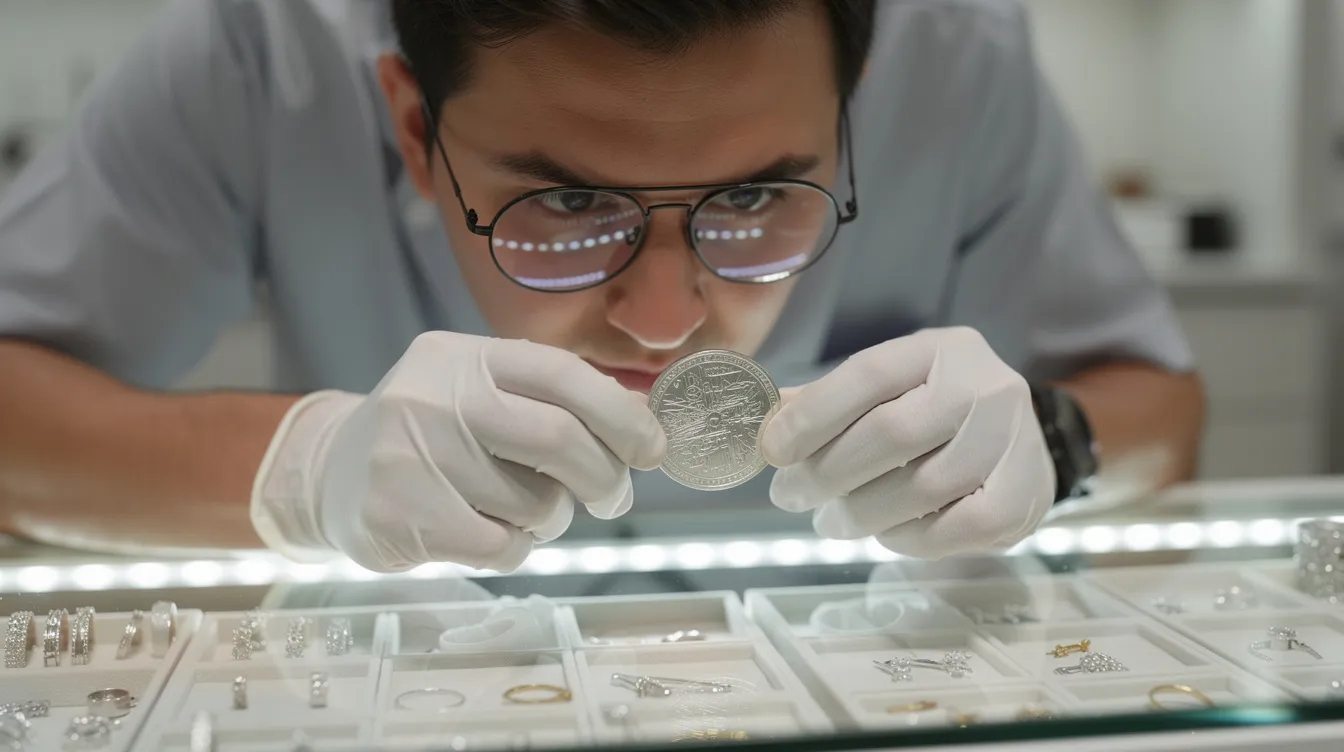
For silver coins, staff check the date (1964 and earlier for washington quarters, dimes, and half dollars), inspect the edge for the telltale absence of a copper stripe, and confirm weight and sound when needed. These steps quickly separate genuine constitutional silver from plated or counterfeit pieces.
For bullion and jewelry, the shop uses electronic testers and XRF (X-ray fluorescence) analyzers that measure purity non-destructively. Certified scales record precise weight, and every calculation is displayed on-screen for the customer to follow.
Security verification also includes customer ID checks as required by Illinois law, plus secure, insured storage of items under surveillance during evaluations. When you visit the Sterling & Knight website, the page uses a security service to check whether the visitor is a human or a bot before access is verified and to protect against malicious automated traffic – you may see a brief message before the site verifies your connection, confirms verification successful, and shows a respond ray id. This keeps both the online and in-store experience safe for everyone.
Quotes are based on live precious metals prices adjusted for silver content, condition, and any numismatic value. There is no obligation to sell – if you just want to know what a coin or piece of silver jewelry is worth, the appraisal is free.
How to Sell Silver to Sterling & Knight Jewelry and Pawn
The process is straightforward: bring your items in, get them tested, review the offer, and walk out with cash if you accept.
What to bring:
- Any silver coins – junk silver, kennedy halves, modern bullion coins
- Silver bullion bars and rounds
- Sterling silver jewelry, flatware, or scrap
- Original receipts or paperwork, if available
How offers are calculated: staff weigh the silver, confirm purity (90%, 92.5%, or .999), reference the current spot price, and factor in any numismatic value for special coins. Everything happens on the counter in front of you – no back rooms, no guesswork.
Why sell locally? Unlike mailing items to an online buyer, selling at Sterling & Knight means face-to-face service, immediate payment in cash, and the ability to ask questions in real time. Your items never leave your sight until you’ve accepted the offer, and you’re never left buying into promises from banks or faceless websites.
Whether you’re holding a single silver dollar or an inherited collection worth thousands, Sterling & Knight is ready to give you a fair, transparent quote. Visit any of the six Chicago-area locations – Joliet, Bolingbrook, Berwyn, Hinsdale, Yorkville, or Villa Park – or call ahead if you’re bringing in a larger collection. Walk in, get your quote, and finish the deal on your terms.