
Most families have a box tucked away somewhere—a handful of old silver coins, a jewelry box filled with sterling pieces, a tea set that’s been passed down for generations, or silver flatware that only comes out during the holidays. When a loved one passes away or downsizes, these items often end up in the hands of someone who has no idea what they’re are worth.
Some inherited silver has tremendous value. Other pieces are worth less than expected. The challenge is knowing the difference before you decide what to keep, what to sell, and where to sell it.
At Sterling & Knight Jewelry & Pawn, customers visit our six Chicagoland locations every week with inherited silver. Sometimes it’s a single silver dollar found in a dresser drawer. Other times it’s an entire estate collection containing coins, jewelry, sterling flatware, bullion, watches, and antiques.
Before you sell inherited silver, here’s what you should know.
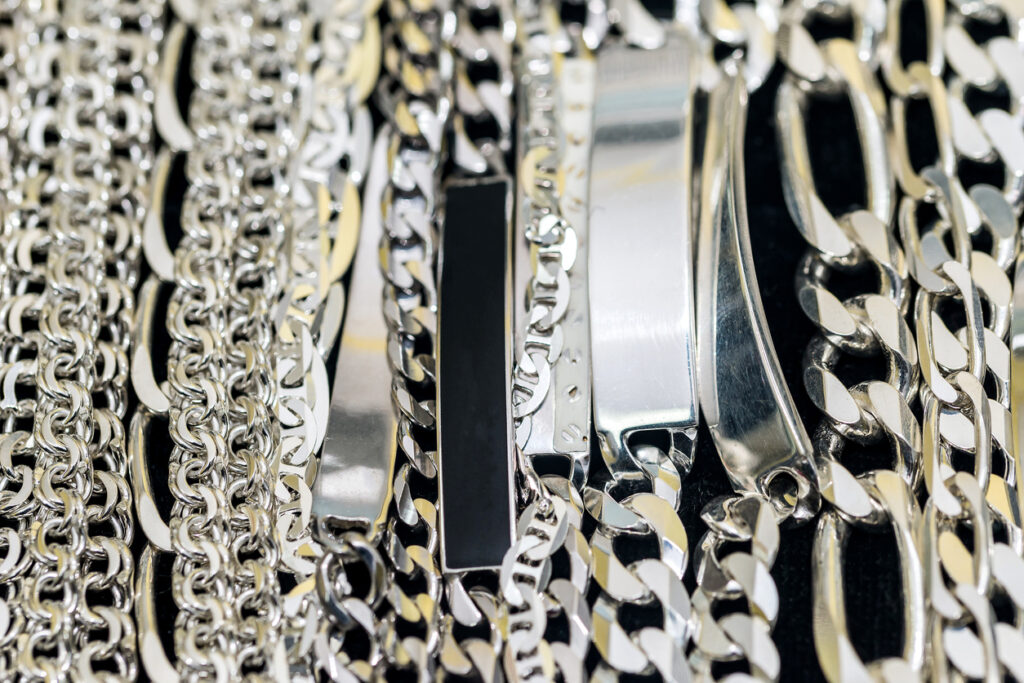
Silver chains at showcase of jewellery shop
First Things First: Don’t Assume It’s Just Old
One of the biggest mistakes people make is assuming old silver isn’t worth much simply because it’s tarnished or worn.
Silver naturally darkens over time. Tarnish isn’t damage—it’s simply a chemical reaction between silver and sulfur in the air. In many cases, tarnished silver is worth exactly the same as polished silver because the value comes from the silver content, not the shine.
Likewise, scratches, worn patterns, or dark spots on silver flatware usually have little effect on melt value.
Age alone doesn’t determine value.
Instead, professionals look at factors such as:
- Silver purity
- Weight
- Current silver prices
- Collectibility
- Brand or manufacturer
- Condition
- Demand
Even items that look ordinary can surprise their owners.
Look for Silver Hallmarks
Before bringing inherited silver in for an evaluation, spend a few minutes looking for markings.
These tiny stamps tell an important story.
Common sterling silver hallmarks include:
- Sterling
- Sterling Silver
- 925
- .925
- 92.5
- Lion Passant (British sterling)
- International Sterling
- Gorham
- Wallace
- Reed & Barton
- Towle
- Tiffany & Co.
The number 925 indicates that an item contains 92.5% pure silver, which is the international standard for sterling silver.
Older European pieces may have completely different markings, while some antique items use symbols instead of words.
If you can’t find a hallmark, don’t assume the item isn’t silver. Years of polishing can wear away markings, and some older pieces simply weren’t stamped.

Inherited Coins Can Be Worth More Than You Think
Many people inherit old coffee cans, cigar boxes, or envelopes full of coins.
Some are ordinary pocket change.
Others contain silver.
As discussed in our previous guide on junk silver, most U.S. dimes, quarters, and half dollars minted in 1964 or earlier contain 90% silver.
Additional silver coins include:
- Morgan Silver Dollars
- Peace Silver Dollars
- Mercury Dimes
- Roosevelt Dimes (1964 and earlier)
- Washington Quarters (1964 and earlier)
- Walking Liberty Half Dollars
- Franklin Half Dollars
- 1964 Kennedy Half Dollars
These coins are often worth many times their face value.
However, some coins carry additional collector value beyond their silver content because of:
- Rare mint years
- Low production numbers
- Mint errors
- Exceptional condition
- Historic significance
This is why it’s important not to spend old coins or sell them solely based on weight until they’ve been evaluated.
Don’t Clean Coins Before Selling
This is probably the single most common mistake people make.
It seems logical that shiny coins would be worth more.
In reality, cleaning collectible coins can permanently reduce their value.
Collectors pay premiums for original surfaces.
Even gentle polishing may remove decades of natural patina, creating hairline scratches that experts immediately recognize.
If you’re unsure whether a coin has collector value, leave it exactly as you found it.
Professional buyers can determine whether its value comes from silver content, rarity, or both.
Silver Flatware Isn’t Always Just Scrap
Many families inherit complete silverware sets.
Some remain in wooden chests for decades.
Others have missing forks, bent spoons, or mismatched serving pieces.
Here’s what determines value:
Sterling Flatware
Marked “Sterling” or “925”
Contains 92.5% silver
Usually purchased by weight, although rare patterns may command premiums.
Silver-Plated Flatware
Marked:
- EPNS
- Silverplate
- Community Plate
- Rogers
- Oneida
Silver-plated pieces contain only a thin layer of silver over another metal.
Most plated items have little precious metal value, although antique patterns may still interest collectors.
Knowing the difference saves disappointment.
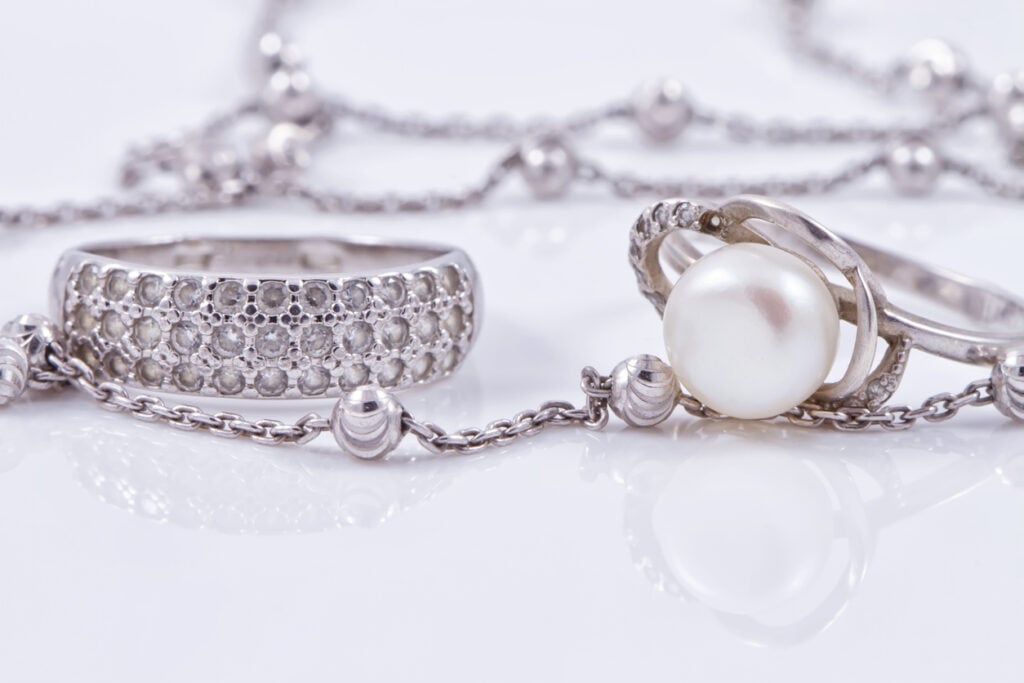
Fine silver rings are together with unusual silver chain on a white acrylic Board
Estate Jewelry May Hold Hidden Value
Jewelry boxes often contain decades of accumulated treasures.
Look for:
- Sterling necklaces
- Bracelets
- Rings
- Lockets
- Charm bracelets
- Belt buckles
- Brooches
- Religious jewelry
- Native American silver jewelry
Some designer names increase value significantly.
Brands such as Tiffany & Co., David Yurman, Georg Jensen, and Silpada may command more than simple melt value because buyers recognize their craftsmanship and demand.
Even broken chains or single earrings may still be worth selling because silver is valued by weight.
Bullion Is Different From Household Silver
Some inherited collections include investment silver rather than jewelry.
Examples include:
- American Silver Eagles
- Canadian Maple Leafs
- Silver rounds
- Silver bars
- Johnson Matthey bars
- Engelhard bars
- Scottsdale Mint products
Bullion is generally valued based on:
- Weight
- Purity
- Current spot price
- Brand recognition
- Market demand
Government-issued bullion often carries higher premiums than privately minted bars.
Keep Any Original Packaging
If your inherited silver includes boxes, certificates, receipts, or original packaging, bring them along.
These materials can help identify:
- Limited editions
- Mint products
- Manufacturer information
- Authenticity
- Provenance
While packaging doesn’t always increase value, it can make certain collectible items more desirable.
Separate Silver Before Bringing It In
If possible, organize your items into categories.
For example:
Coins
Separate pre-1965 coins from newer coins.
Jewelry
Group sterling jewelry together.
Flatware
Keep complete sets together.
Bullion
Leave bars and rounds in protective sleeves if possible.
Organization speeds the evaluation process and helps ensure nothing gets overlooked.
Avoid Selling to the First Buyer You Find
Estate collections deserve careful evaluation.
Unfortunately, some sellers receive offers based only on weight without anyone checking for collectible value.
A rare silver dollar, vintage Tiffany serving spoon, or key-date Mercury dime may be worth considerably more than its melt value.
At Sterling & Knight Jewelry & Pawn, every collection is examined for both precious metal content and collectible characteristics whenever appropriate.
The goal is to provide a fair, transparent offer based on what you actually have.

How Sterling & Knight Evaluates Inherited Silver
When you visit one of our six Illinois locations, our experienced staff follows a professional evaluation process.
We begin by identifying each item.
Coins are checked for date, denomination, mintmark, silver content, and potential numismatic value.
Jewelry is examined for hallmarks, tested for purity using professional equipment, and accurately weighed.
Flatware and hollowware are sorted by sterling or plated construction before being evaluated.
Bullion products are verified for weight, purity, and authenticity.
Throughout the process, you’ll receive a clear explanation of how your offer is calculated.
There is never any obligation to sell.
If you simply want to understand what you’ve inherited, we’re happy to provide a free evaluation.
Should You Keep Some Silver?
Not every inherited item needs to be sold.
Many families choose to keep:
- Wedding silver
- Military presentation pieces
- Family heirlooms
- Engraved jewelry
- Coins with sentimental history
Others decide to sell duplicate items or pieces they know they’ll never use.
There’s no right or wrong answer.
The important thing is understanding what you have before making that decision.
Why So Many Families Choose Sterling & Knight
Selling inherited silver is often emotional.
You’re not simply selling metal—you may be handling a loved one’s possessions for the first time.
Our team understands that.
Customers appreciate:
- Honest evaluations
- Professional silver testing
- Transparent pricing
- Knowledge of both bullion and collectible coins
- Same-day cash offers
- Convenient locations throughout the Chicago area
Whether you inherited one sterling bracelet or an entire estate, we’re here to answer your questions without pressure.
Turn Uncertainty Into Confidence
An inherited silver collection can feel overwhelming at first. Boxes of coins, tarnished flatware, old jewelry, and bullion may all look alike to someone unfamiliar with precious metals, but their value can vary dramatically. Taking the time to have your collection professionally evaluated can help you avoid costly mistakes and ensure you understand exactly what you have.
At Sterling & Knight Jewelry & Pawn, we proudly help families throughout the Chicago area evaluate inherited silver with honesty, transparency, and expertise. Visit any of our six convenient locations in Joliet, Yorkville, Berwyn, Bolingbrook, Hinsdale, or Villa Park for a free, no-obligation evaluation. Whether you’re ready to sell today or simply want answers about your family’s silver, our experienced team is here to help you make an informed decision with confidence.